
Most homeowners think the first thing they need is a price.
They want to know:
"How much is this going to cost?"
That's understandable.
A remodel is a major investment, and nobody wants to spend more than they need to.
But there's a problem with asking for a price before anyone has figured out what you're actually building.
You can't price something that hasn't been created.
The Number Becomes the Whole Conversation
A lot of homeowners start with a number in their head.
Maybe it's based on something a friend told them.
Maybe it's what they found online.
Maybe it's what a neighbor paid.
Maybe they simply decided, "I don't want to spend more than $100,000."
And then everything has to fit inside that number.
The problem is that the number doesn't tell you what you're getting.
It doesn't tell you what materials are included.
It doesn't tell you how the work will be done.
It doesn't tell you whether the right people are involved.
It doesn't tell you what has been researched.
It doesn't tell you what's required by the city, the HOA, or the existing house.
And it certainly doesn't tell you whether the project can actually be completed for that amount.
Price is important. But price without a plan doesn't mean very much.
"You can't price something that hasn't been created."
What Are You Actually Asking Someone to Price?
When a homeowner says,
"Can you give me an estimate?"
they may think they're asking for a number.
But if we're going to give you a real number, there's a lot that has to happen first.
We need to understand the project.
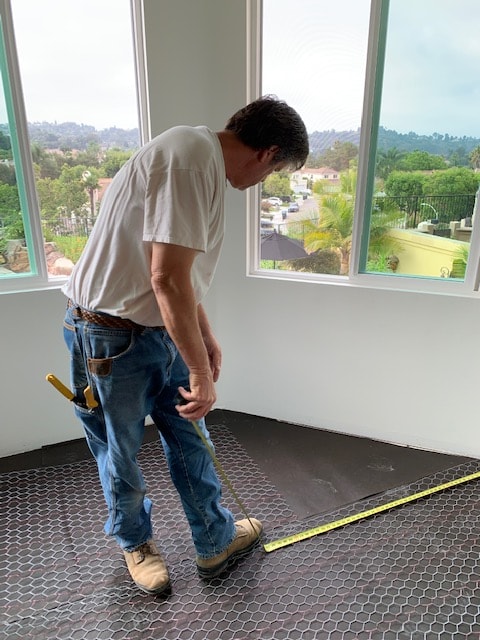
We need to look at the existing space and everything connected to it.
We need to take measurements.
We look at the property lines, roof lines, surrounding structures and the relationship between the space you're changing and everything around it.
We look at things you may not even be thinking about — where the sewer is, where the water and gas meters are, what access looks like and what the existing house is going to allow us to do.
Then we need to understand what you actually want to accomplish.
What's your dream scenario?
Tell us everything.
Even the things you think aren't realistic.
Even the things you don't think are part of the project.
Because sometimes the thing you mention in passing turns out to be the thing that changes the entire design.
Design Comes Before the Real Number
Once we understand the house and what you're trying to accomplish, there's still work to do.
Research.
City requirements.
HOA requirements when applicable.
Codes and ordinances.
Feasibility.
Design.
Revisions.
Meetings.
Material selections.
Then pricing the work with the trades and suppliers involved.
Then putting all of that together into a proposal based on the project that actually exists.
That's how a number becomes real.
Not because someone looked at a picture and guessed.
Not because someone gave you a price over the phone.
And not because a contractor wanted to be the lowest number in the room.
We've Seen What a "Low Price" Can Leave Out
We see this often with projects like ADUs.
A homeowner may get several prices.
One contractor is low.
Another is somewhere in the middle.
Tuscany may be higher.
At first glance, it looks easy.
The lowest price wins.
But then you look at what each number actually includes.
Does it include all the fixtures?
Does it include the materials?
Does it include everything necessary to complete the project?
Because you can't complete a project if you don't include everything that needs to go into it.
A low number isn't necessarily a low price.
Sometimes it's just a number that doesn't include the whole project.
And once you've signed a contract based on that number, you're already committed.
That's when the things that weren't included start showing up.
We Start With the House
When Dino walks into a project, he isn't just looking at the room the homeowner wants remodeled.
He's looking at the space and its connection with everything.
That's important.
A kitchen isn't just a kitchen.
It's connected to the living room.
It's connected to the structure.
It's connected to the plumbing.
It's connected to the electrical.
It's connected to how people move through the house.
It's connected to the backyard.
Sometimes it's connected to the roof.
Sometimes one decision affects five other decisions.
That's what we're looking at before we ever put a number on the project.
Tell Us What You Really Want
The first question isn't:
"What's your budget?"
It's:
"What would you like to achieve?"
Tell us what you want the house to become.
Give us your dream scenario.
We'll listen to all of it.
Because homeowners don't always know which parts matter most.
They may talk for an hour and think they're telling us about a kitchen.
But somewhere in that conversation, they tell us they want to entertain their family every Sunday.
Or they want to see the backyard from the kitchen.
Or they want their grandchildren to have a place to gather.
Or they're tired of walking through three rooms just to get from one side of the house to the other.
That's the information that helps us design the right project.
Sometimes we'll make a quick sketch to explain what we're seeing.
Usually, we're measuring the space and talking through the possibilities.
What's interesting is that when we leave that measurement, we have an idea in our heads of what we're going to design.
That's the talent behind Tuscany Builders.
You Don't Need Another Number
There are people who want a number first.
Then they'll find someone who can do it for less.
There are people who want a professional to give them a number so they can take that number somewhere else and try to beat it.
And there are homeowners who understand that they need to define the project first.
They understand that design, materials, research, decisions and construction all affect the final cost.
Those are the homeowners we work best with.
Because we're not interested in giving you a number just to win the job.
We're interested in creating the project first.
Then telling you what it will take to build it properly.
If All You Want Is a Number...
We're probably not the right company.
You cannot price something that has not been created.
A real project has to come from somewhere.
It starts with your house.
Your goals.
Your ideas.
The possibilities.
The things the existing structure will allow.
The things it won't.
The decisions that need to be made.
Then the design.
Then the materials.
Then the work required to make it real.
That's when the number means something.
You don't need another estimate.
You need a plan.
Start With a Plan, Not a Number
Your house.
Your goals.
Your ideas.
Then the design. Then the materials. Then the work required to make it real.
That's when the number means something.
Related Services
Ready to Start?
Start with the Remodel Jumpstart
Dino will walk your home, review your goals, and give you a clear scope, budget range, and project roadmap — before you commit to anything.
Learn About the Remodel Jumpstart